
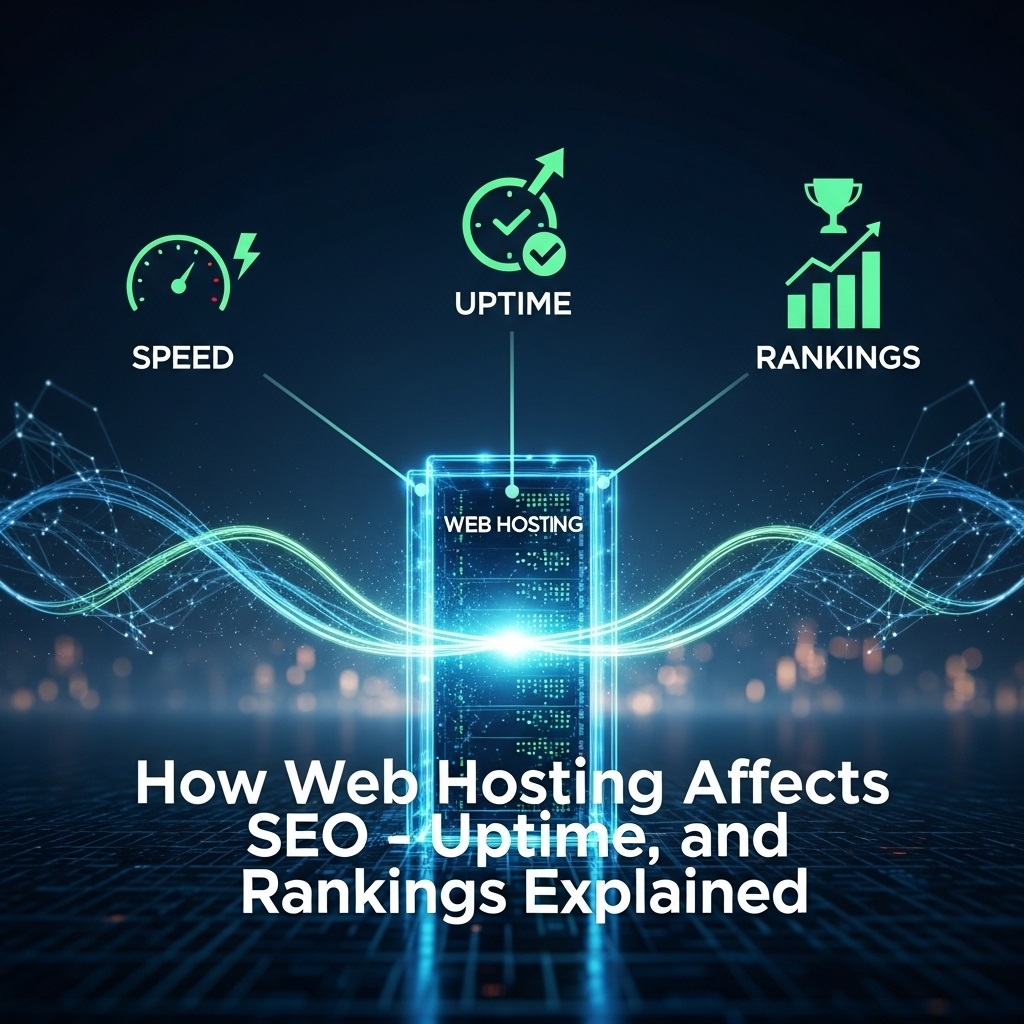
Quick Answer: Web hosting has a direct impact on SEO because it affects page speed, uptime, crawlability, Core Web Vitals, security, and user experience — all of which influence how search engines rank your website.
Introduction: Why Hosting Is an SEO Foundation
Many website owners focus on content, keywords, and backlinks, but overlook one critical factor: web hosting. Even the best content cannot rank well if it loads slowly, goes offline frequently, or suffers from server instability.
Search engines like Google prioritize websites that are fast, reliable, and secure. Your hosting provider determines whether your site can meet these expectations consistently.
Page Speed and Its Impact on Rankings
Page speed is a confirmed Google ranking factor and a major driver of user engagement.
- Rank higher in search results
- Have lower bounce rates
- Keep users engaged longer
- Convert more visitors into customers
Hosting directly influences page speed through CPU performance, SSD or NVMe storage, server response time (TTFB), and the ability to handle traffic spikes.
Server Response Time (TTFB)
Time to First Byte (TTFB) measures how quickly your server responds to a browser request. Slow TTFB often indicates overcrowded shared servers, poor configuration, or low-quality infrastructure.
Uptime, Downtime, and Crawlability
Search engines need consistent access to your website to crawl and index content. Frequent downtime can prevent indexing, reduce rankings, and damage trust signals.
SEO-focused hosting should provide 99.9% uptime or higher.
Server Location, Latency, and Global Performance
Server location affects how quickly content reaches users. Hosting closer to your audience reduces latency, while a CDN improves global performance by serving cached content from nearby locations.
Shared Hosting vs VPS vs Dedicated Servers for SEO
Shared Hosting
Shared resources, higher risk of slowdowns, and limited scalability.
VPS Hosting
Dedicated virtual resources, strong balance of cost and performance, ideal for SEO growth.
Dedicated Servers
Exclusive hardware, maximum performance, and best for high-traffic or enterprise SEO projects.
Core Web Vitals and Hosting Quality
Hosting quality directly affects Core Web Vitals such as Largest Contentful Paint (LCP), First Input Delay (FID), and Cumulative Layout Shift (CLS).
Security, Stability, and SEO Protection
Security issues can result in malware warnings, spam injections, and ranking penalties. SEO-friendly hosting should include firewalls, malware scanning, and DDoS protection.
IP Reputation and SEO Considerations
Sharing IP addresses with spammy websites can affect trust and email deliverability. VPS and dedicated hosting reduce this risk.
Hosting Scalability and SEO Growth
Scalable hosting allows resource upgrades without downtime, stable performance during traffic spikes, and long-term SEO growth.
How to Choose SEO-Friendly Hosting
- SSD or NVMe storage
- Low server response times
- High uptime guarantees
- Scalable CPU and RAM
- Reliable technical support
Conclusion: Hosting Is an SEO Investment
SEO success starts with a strong hosting foundation. Fast, reliable, and secure hosting improves rankings, user experience, and long-term business growth.